

Valheim Copper Guide: Best Black Forest Nodes & What to Craft First
A practical Valheim guide on where to find copper ore in Valheim, how to mine Black Forest deposits, and what to craft first.
Read the guide →
Learn where to harvest Guck in Valheim, locate the glowing swamp trees, and collect this rare material without falling into the depths.

If you’ve been trying to figure out where to harvest Guck in Valheim, the short answer is: head to the Swamp biome. Guck doesn’t grow in the Meadows, Black Forest, or Mountains. It only shows up on certain ancient trees in the Swamp, and honestly, those trees are easy to miss if you don’t know exactly what you’re looking for. So here’s a proper Swamp tree guide to help you spot Guck trees, gear up, and farm Guck fast without losing your loot in the water.
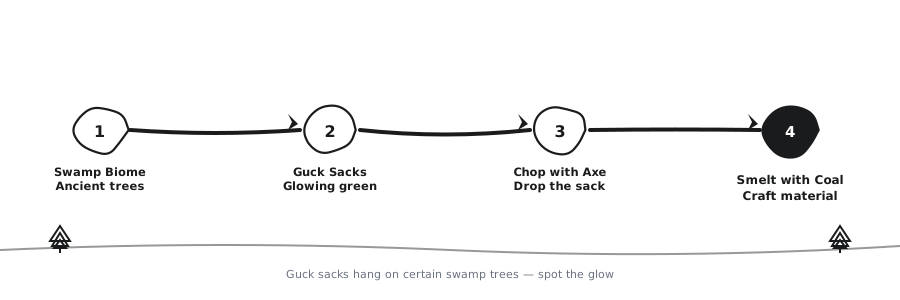
Guck is that gooey, glowing green material that drops from special Guck sacks hanging on swamp trees. It looks like something you’d scrape off your boot, but it’s actually a useful crafting material. Pop it in a Smelter with some coal, and you’ll get Glass. If you like building, Glass is a big deal — it lets you craft windows and decorative pieces for your base.
You won’t find Guck in normal chests or underground. You have to harvest it from the environment, usually from high up in a tree. And since the Swamp is full of water, leeches, and angry draugr, you really need a plan before you start swinging.
Still wondering where to harvest Guck in Valheim? The answer is simple: Guck trees in Swamp biomes.
You can spot these trees from far away once you know the trick. They’re the giant old swamp trees with hanging yellow-green pods hanging off the branches. Those pods are the Guck sacks, and when you break them, they drop Guck. Some players call them “glowing” trees because the pods almost glow in the dim swamp light. When I scout a new Swamp, I sail slowly along the coastline and look for those bright green blobs. They’re easy to spot during the day, but even easier to spot at night in the dark.
One thing to keep in mind: not every big tree in the Swamp has Guck. If a tree has no yellow-green pods hanging from it, move on. Keep your eyes on the lower branches, because that’s where Guck tends to gather.
Before you jump into a Swamp, make sure you’re ready. Guck farming isn’t dangerous if you’re smart, but the Swamp can still kill you fast when you least expect it.
New player warning: mark the tree on your map when you find one. After you harvest a Guck tree, change the marker so you don’t come back later and waste time climbing an empty tree.
Here’s the real meat of the guide — the safest way to farm Guck. Follow these steps, and you’ll walk out with plenty of Guck and no surprise death.
Step 1 – Find a safe area around the Guck tree.
Once you spot a Guck tree, don't swim straight to it. Park your boat on solid ground or shallow water near the shore. Kill or avoid any draugr, skeletons, and leeches nearby before you start working. The Guck won't disappear while you clear the area.
Step 2 – Make a dry landing spot.
This is the biggest trick for harvesting Guck. Guck drops straight down when you break the sack. If it lands in deep water, you’ve got two options: jump in and try to grab it, or lose it. Don’t do either.
Instead, grab your hoe and raise the ground below the Guck sacks. If the tree is close to the shore, you can raise a little hill out of the swamp mud and stand on it while you hit the Guck. If the water is too deep for the hoe, build a wooden platform or stairs out over the water. The goal is to make the Guck fall onto something dry that you can stand on while you collect it.
I learned this lesson the hard way. The first time I tried to farm Guck, I stood in the water and broke a sack with my axe. The Guck dropped right into the swamp, I went to grab it, and a leech hit me before I even saw the item. Now I always raise the ground or build a deck before touching a Guck sack.
Step 3 – Climb to the Guck sacks.
Some Guck sacks hang just above head level. Others hang too high to reach. If the tree has branches you can jump on, use them to climb up to the pods. If not, build a simple wooden staircase against the tree with your hammer.
You don’t need to be right next to the sack. You just need to be close enough to hit it.
Step 4 – Break the Guck sacks.
Once you’re in position, break the sacks. For close sacks, use your axe. For sacks that are far out over the water, use your bow. Aim at the glowing pod and release. Each sack pops after a hit or two, and the Guck falls straight down.
Because you already made a dry spot below, you can just look down and pick up the Guck without getting wet.
Step 5 – Pick everything up before you move on.
Guck items don't vanish in a few seconds, but that doesn't mean you should leave piles scattered everywhere. After each tree, pick up every piece. Then move to the next tree and repeat.
Guck isn't hard to farm, but players still mess it up all the time. Avoid these mistakes and you’ll stay alive.
Farming Guck straight from the water. If you stand in the swamp to hit a Guck sack, you’re stuck in slow movement. That makes you an easy target for leeches. Build something. Raise the ground. Do anything except stand in the water while farming.
Forgetting a hoe or building materials. You’ll find a Guck tree hanging over deep water, and then you’ll have no way to reach the drops safely. Always carry a hoe, some stone, and extra wood on your Swamp trips.
Farming at night without a plan. Swamp night spawns wraiths, and wraiths love to catch players busy chopping at trees. If you’re not ready for wraiths, go home before nightfall or do your Guck farming during the day. That’s the easiest way to keep the Swamp from turning into a nightmare.
Another warning for new players: don’t pop every sack on one tree and then leave the drops scattered. If you break too many at once from the wrong spot, Guck can land in the water and get lost. Break one or two sacks, grab the Guck, then clear the next cluster.
Where to harvest Guck in Valheim?
You harvest Guck from glowing Guck sacks on Guck trees, and those trees only spawn in the Swamp biome. Search the swampy coastlines and look for glowing yellow-green pods hanging from the branches of ancient trees.
Does Guck respawn after you harvest it?
No. Guck sacks don’t respawn on the same tree. If you need more Guck, you have to travel to another part of the Swamp and find fresh Guck trees. That’s another reason to keep your map organized.
What’s the best way to collect Guck without dying?
Use a hoe to raise the ground below the Guck sacks before you break them, or build a wooden platform under the tree. Stand on that dry spot, hit the sack with your axe or bow, and pick up the Guck as soon as it drops. Never stand in deep swamp water while you’re farming Guck.
What can I make with Guck?
You can smelt Guck in a Smelter to make Glass. Glass is a building material that lets you craft windows and add decorative pieces to houses and other structures around your base.
Keep reading on Gaming Tip Hub.

Learn the best way to tame boar in Valheim, from harpoon kiting to carrot pens, so you can breed a steady supply of leather scraps and boar meat.
Read the guide →A practical Valheim guide on where to find copper ore in Valheim, how to mine Black Forest deposits, and what to craft first.
Read the guide →
Essential Valheim swamp survival tips for navigating the Wetland biome, defeating Bonemass, and securing the best gear.
Read the guide →
Learn where to find iron scrap in sunken crypts in Valheim, including sunken crypt doors, muddy scrap piles, and the safest iron route.
Read the guide →
Complete Valheim Bonemass Boss Guide covering location, weaknesses, best gear, and a safe strategy to beat the swamp's toughest boss.
Read the guide →